Flower Hair Accessories for Brides: Paranda, Hair Chains and Styles
Flower hair accessories for brides: parandas for braids, shell and floral hair jewellery for open hair, which hairstyle suits each, and how to match.
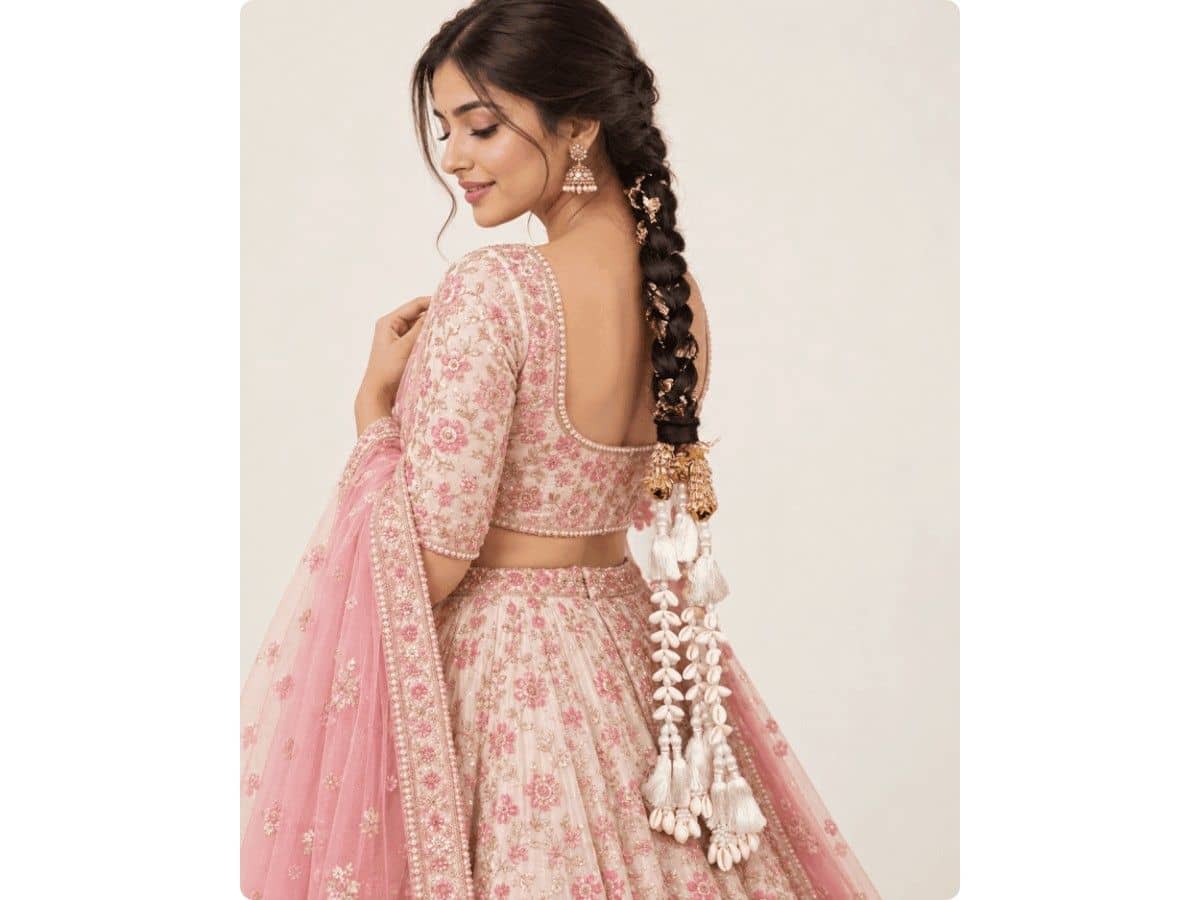
Flower hair accessories for brides are pieces worn in the hair: a paranda that hangs from a braid, a hair chain or floral piece for open or half-up hair, and a maang tikka at the parting. Choose your hairstyle first, then the piece made for it, then colours that echo your jewellery set.
This guide is for brides planning their hair for haldi, mehndi, sangeet or the wedding. It is based on the 13 pieces in our bridal hair accessories collection and what each product page says. All 13 name mehndi as an occasion, and most also name haldi and wedding functions.
The main types of bridal hair accessories
Our hair pieces fall into two groups.
- Parandas for braids. A paranda (also called a parandi) is tied into the end of a plait and hangs below it. Seven of our 13 hair pieces are parandas, finished with tassels, latkans, cowrie shells, pearls or golden charms.
- Hair jewellery for open, half-up and bun styles. The other six are pinned into the hair. They include cowrie shell flowers with pearl chains, mirror work pieces, floral hair chains and a peacock kundan-style piece.
Six of the 13 descriptions mention cowrie shells, six mention pearls and three mention mirror work.
Parandas: for the braided bride
A paranda suits a long braid, because it adds length, movement and colour to the plait. The Bridal White Cowrie Shell Paranda, pictured at the top, has white cowrie shells, golden detailing and long hanging tassels, and its page says it is designed to decorate braided hairstyles.
Our parandas differ mainly in their finish:
- Shell tassels for a light, natural look that suits haldi and mehndi.
- Pastel or multicolour tassels to pick up the colours of a floral set.
- Golden chains and latkans for a more traditional, festive feel.
Tell your hairstylist which paranda you have chosen, so the braid is planned around it.
Hair jewellery for open and half-up hair
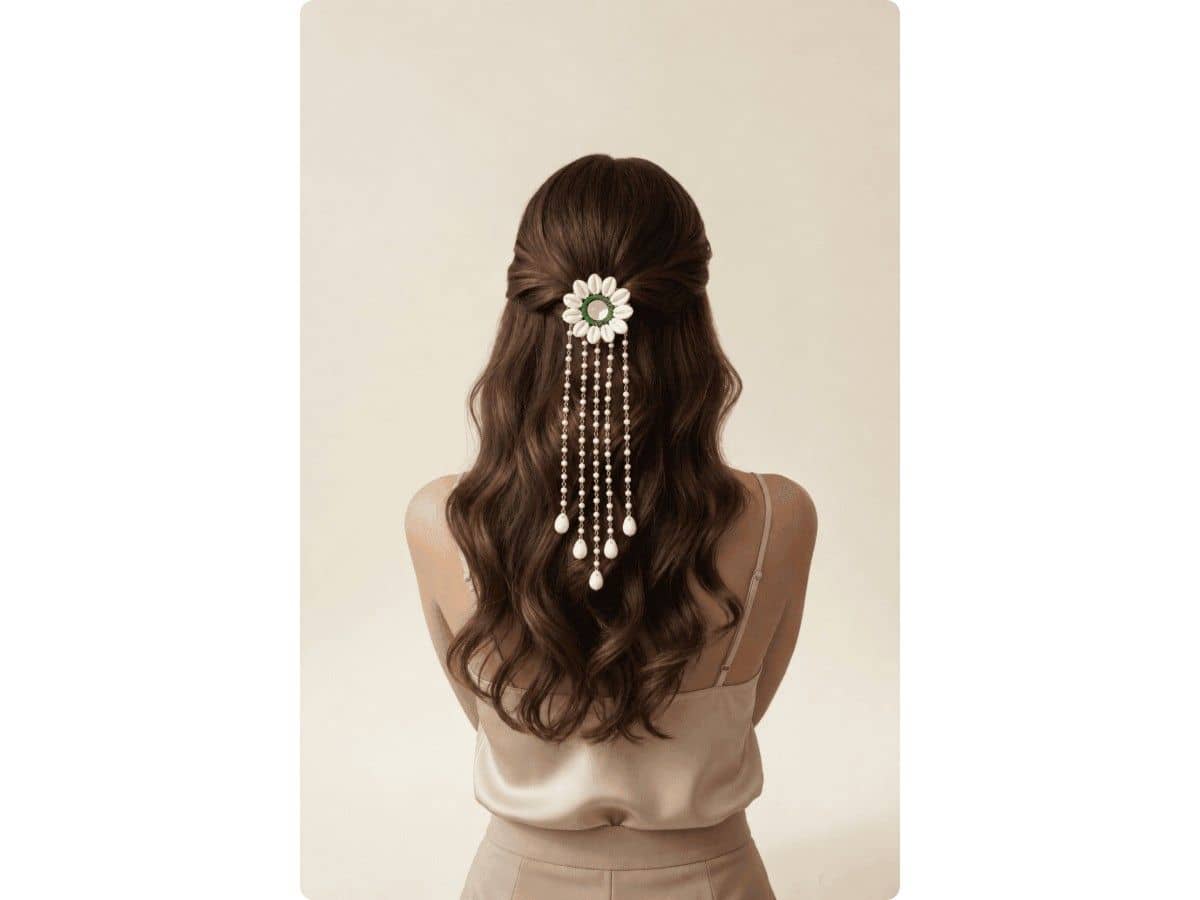
If you plan to leave your hair open or half-up, choose a piece that sits at the back of the head and falls over the hair.
- Mirror work shell pieces. The Handmade Green Mirror Work Cowrie Shell Hair Jewellery, pictured in this section, has white cowrie shells around a round mirror with a green border, with long pearl-beaded chains and shell hangings.
- Floral hair chains. The pink and yellow floral hair jewellery has flowers on golden chains, and its page says it is designed for open hair, braids and bridal hairstyles.
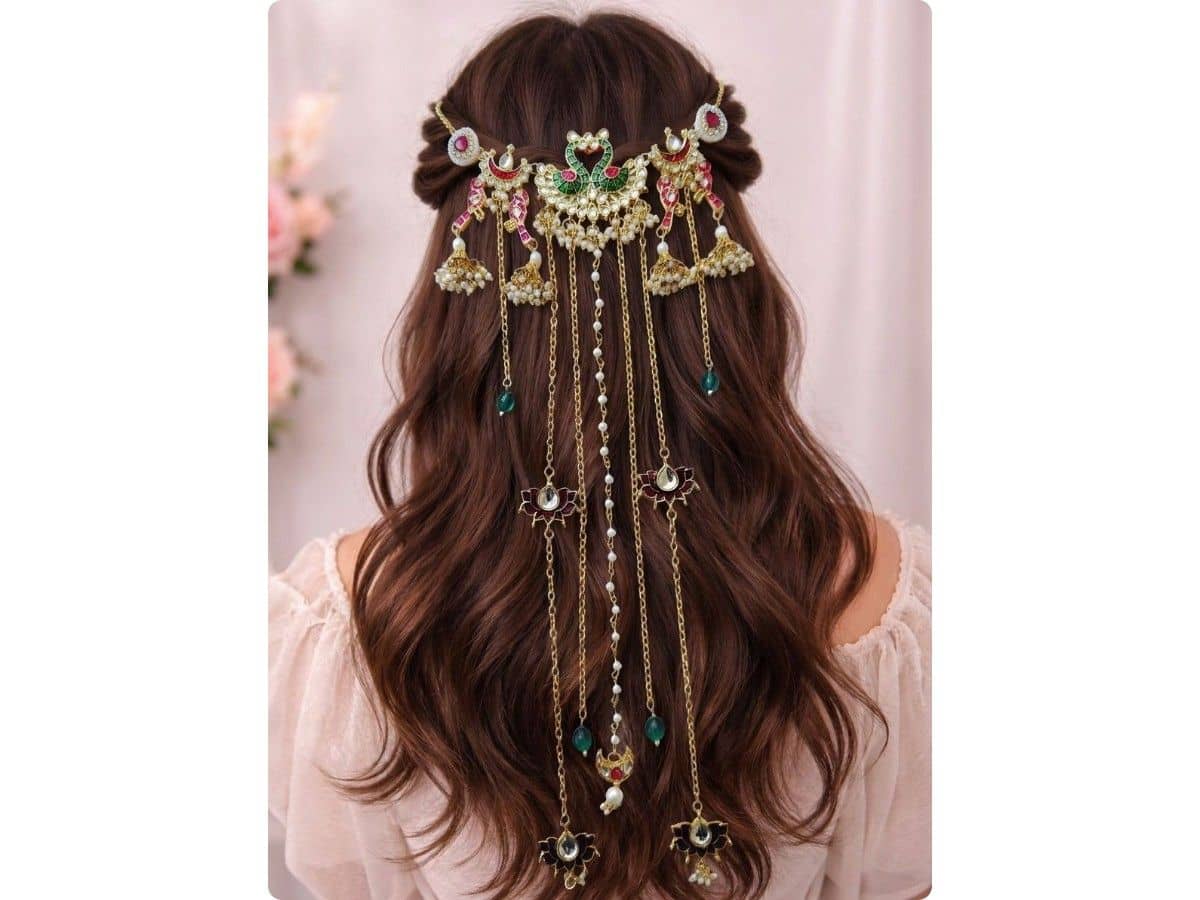
- Kundan-style statement pieces. The Traditional Peacock Kundan Bridal Hair Jewellery, pictured in this section, has a peacock design in green and pink stonework with golden chains, pearls and hanging jhumka charms. Its page suggests it for open and half-up hairstyles at weddings, mehndi and sangeet.
Choosing a hairstyle for your hair piece
- Long braid: a paranda, which needs length to fall along.
- Half-up hair: a shell flower piece or mirror work piece at the crown, with its chains over the open hair.
- Open waves: a floral hair chain or a statement piece across the back.
- Bun: a maang tikka at the front, and a smaller floral piece around the bun.
Try the hairstyle with the piece on before the function, so you can see how it sits and moves.
Matching hair accessories with your set
A hair piece works best when it belongs to the same look as your necklace and earrings.
- Repeat one material. A shell paranda with a cowrie shell set, or a floral chain with a flower set.
- Repeat one colour. Pick up a colour from your jewellery, not just your outfit.
- Keep one focal point. With a long statement hair piece, choose simpler earrings.
For choosing the rest of your set, read our guide to artificial flower jewellery sets. For the mehndi day in particular, see floral jewellery for mehndi.
Planning step by step
- Choose the outfit first. Its colour and neckline decide what will look balanced.
- Pick the hairstyle with your stylist. Show the piece you plan to wear.
- Choose the hair piece. Match it to one other piece in your set.
- Do a trial. Wear it with the hairstyle once before the function, and move around in it.
Mistakes to avoid
- Choosing the piece after the hairstyle is fixed. Plan the hairstyle around the piece.
- Too many pieces at once. A paranda, a tikka and several pins together can look crowded.
- Skipping the trial. A piece that looks secure on a stand can move once you start dancing.
Custom orders
If you want a hair piece in colours to match your set, Floral Jewellery takes custom orders. Our home page says to email info@floraljewellery.in, and to place a custom order as early as you can before your function.
Final thoughts
Choose the hairstyle first and the hair accessory second: a paranda for a braid, a shell or floral piece for open or half-up hair. Repeat one material or colour from your set, and do a trial before the day.
Quick checklist
- Decide braid, half-up, open or bun.
- Paranda for a braid; hair jewellery for open hair.
- Repeat one material or colour from your set.
- Show your stylist the piece.
- Do a trial before the function.
About the Author
Floral Jewellery
Frequently Asked Questions
What is a paranda?
A paranda, also written parandi, is a braid ornament with tassels, latkans or charms that is tied into the end of a plait and hangs below it.
Which hair accessory suits open hair?
A piece that sits at the back of the head with chains falling over the hair, such as a cowrie shell flower with pearl chains or a floral hair chain.
Are these hair accessories made for haldi and mehndi?
Yes. All 13 pieces in our bridal hair accessories collection name mehndi as an occasion, and most also name haldi and wedding functions.
Should my hair piece match my jewellery?
It looks best when it repeats one material or colour from your necklace and earrings, such as a shell paranda with a cowrie shell set.
Can I get hair jewellery in custom colours?
Floral Jewellery takes custom orders. Email info@floraljewellery.in, as our home page says, and order as early as you can before your function.
Comments (0)
Please log in to post comments and replies.